

Technology
Crystalline or membrane: two ways to make concrete waterproof
A membrane or coating is a layer on top of the concrete. Crystalline waterproofing sits in the concrete itself, even when you apply it to the surface. You notice that difference when the surface is damaged and in the scheduling of the site.
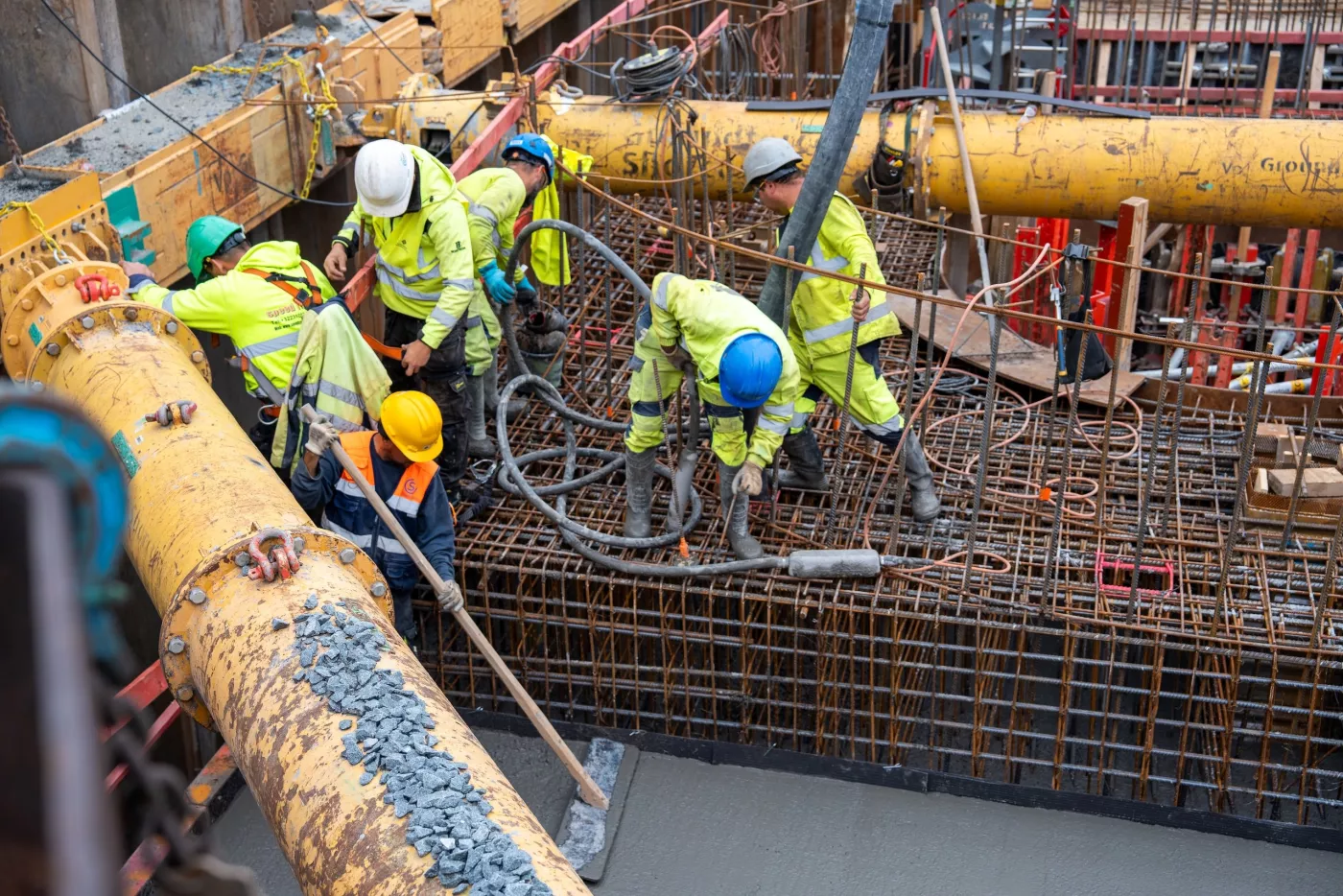
For a basement or a tunnel, the same choice comes up: a membrane around the concrete, or concrete that is waterproof in itself. Which of the two suits depends on what happens to the concrete after it is poured and on what the site allows. Below you can see what each one does, and where each has its limits.
Crystalline or membrane, point by point
A membrane or coating is a layer on top of the concrete. If that layer is damaged, it can crack or come loose. Crystalline waterproofing works in the pores and capillaries of the concrete itself. Penetron Slurry, which is applied to the surface, is not a coating either: the material penetrates the concrete and forms crystals there.
| Point | Membrane or coating | Crystalline, such as Penetron Admix and Slurry |
|---|---|---|
| Where the protection sits | On the concrete, as a layer on the surface | In the concrete, deep in the pores and capillaries |
| If the surface is damaged | The layer can crack, be punctured or come loose | There is no layer to come loose, the protection stays |
| A hairline crack up to 0.5 mm | Stays open, only the layer holds back the water | Is sealed by crystals in the concrete itself |
| A new crack, later on | Stays open, the layer protects only as long as it is intact | Is sealed as well: with new moisture, the crystals keep growing |
| Application | As a separate layer on the surface, an extra step on site | Admix in the mix when pouring, Slurry on the concrete afterwards |
What it changes on site
With Penetron Admix or Admix SB in the mix, the waterproofing is already in the concrete when it is poured. No layer is added after pouring. Because the admixture is added when the concrete is mixed, it is also not subject to weather restrictions.
That scheduling advantage was decisive for the Indaver biotanks in Antwerp. Indaver chose Admix to avoid time problems and to make a coating or membrane system unnecessary. At Veemnatie, also in Antwerp, Admix went into a concrete slab of about 11,000 m², so no extra coatings or membranes were needed.
For existing concrete there is Penetron Slurry. It can be applied to damp and to young concrete, and the treatment needs no protection during backfilling or when placing reinforcement.
Where crystalline has its limits
Crystals seal hairline cracks up to 0.5 mm. A wider crack or a honeycombed area is first repaired with Penecrete Mortar. Joints that need to move, such as expansion joints, are not a job for a crystalline mortar.
A crystalline basement has joints too. Construction joints receive a swelling waterstop such as Penebar SW-55, fitted with Penebar Primer, and that waterstop is intended only for joints that do not move. Waterproofing therefore remains a system: the concrete quality, the joints, the formwork ties, the pipe penetrations and the curing all count.
If there is movement in the substrate, an elastic layer can make sense. Penetron has one of its own: Penecryl Elastic turns Seal Coat into an elastic system with better crack-bridging capacity. Note that Seal Coat is not intended for negative side waterproofing where water is under pressure.
Belgian sites without a membrane
The sludge bunker of Aquafin in Ghent is almost 40 metres high and stores sludge up to a height of 20 metres, in exposure classes EE3, XA2 and XF1. Penetron Admix SB was added at the ready-mix concrete plant to about 753 m³ of concrete for the foundation slab and 2,360 m³ for the walls. No external membranes or coatings were used.
For the greenhouse building of KU Leuven in Heverlee, contractor Denys built a basement on a site with a high groundwater level. Admix SB went into about 530 m³ of concrete, without additional membranes. In Obourg, the tunnel of Holcim's Go4Zero project lies partly below the groundwater. There too, Admix SB went into the concrete at the plant, with Penebar SW in the cold joints and without external membranes.
On a bridge deck: a sealer without a visible layer
The Bypass Noord of the Oosterweel Connection in Antwerp has 30 bridge decks. During the site inspection, cracking was found on several decks. There, Peneseal Pro was sprayed on before the asphalt layer went on top: a liquid sealer that forms a gel just below the concrete surface. No visible layer is created, so the bond of the asphalt is not affected. The application is simpler and faster than with a membrane system.
Questions
Can crystalline waterproofing replace a membrane?
At the Aquafin sludge bunker in Ghent, the KU Leuven basement in Heverlee and the Go4Zero tunnel in Obourg, no membrane was added. Whether that is possible for your structure depends on the joints, the pipe penetrations, the water pressure and the execution. A Penetron Benelux adviser will check this with you.
What if the concrete surface gets damaged?
A membrane or coating can then crack or be punctured. With crystalline waterproofing, the protection is inside the concrete: the waterproofing properties stay intact, even if the surface is damaged.
Do I still need waterstops with crystalline concrete?
Yes, for the construction joints. Penebar SW-55 with Penebar Primer seals joints that do not move. Expansion joints need a different solution.
Can I apply crystalline waterproofing if the outside has already been backfilled?
Yes. Penetron Slurry can be applied to the negative side of the concrete, that is, the inside of the wall. The concrete must be clean and damp.
Also read
More about concrete and waterproofing
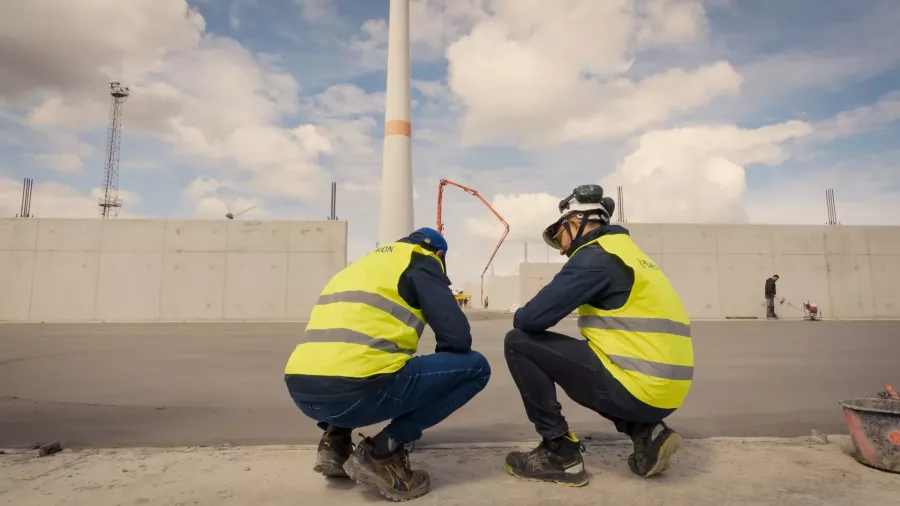 Crystalline waterproofingHow crystalline waterproofing works: crystals seal pores and hairline cracks up to 0.5 …
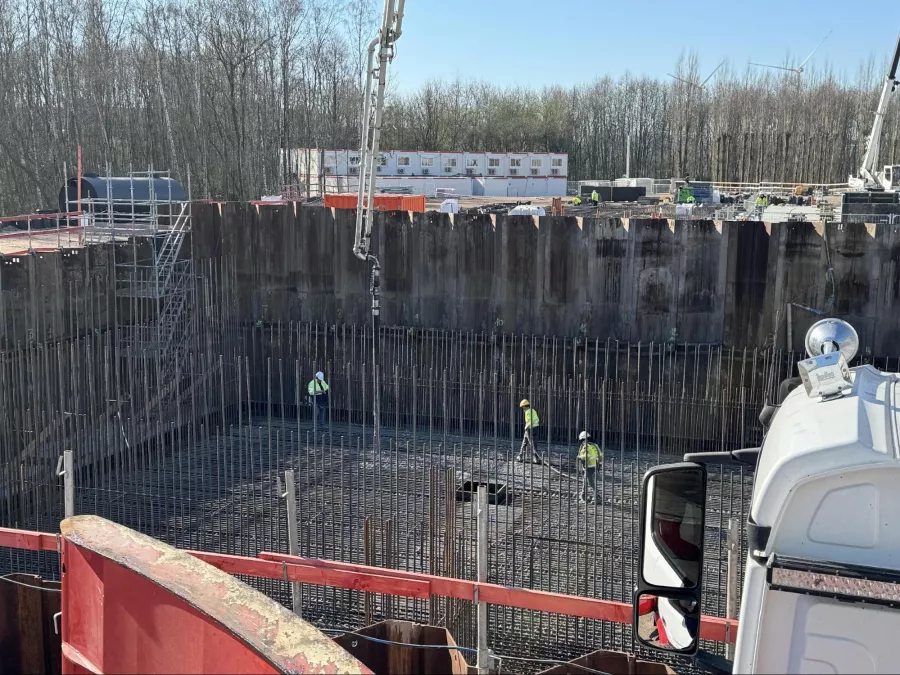 Self-sealing concreteSelf-sealing concrete closes hairline cracks up to 0.5 mm, with crystals that grow when …
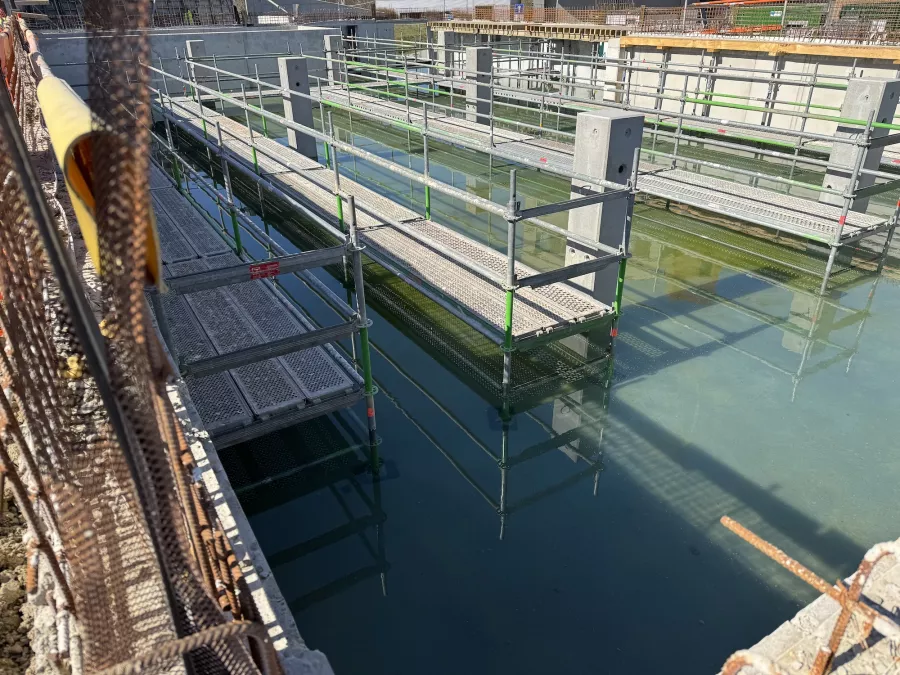 Waterproof concrete basementWaterproof concrete basement with crystalline concrete: Admix in the mix for new builds, …
Contact
Discover how Penetron can strengthen your next construction project
Tell us about your project. We will help you choose the right product.