

Application
Waterproof concrete basement: building and repairing with crystalline concrete
In a waterproof concrete basement, the floor and walls themselves hold back the groundwater. In new builds, Penetron Admix goes into the concrete mix. For an existing basement, Penetron Slurry is applied to the concrete.
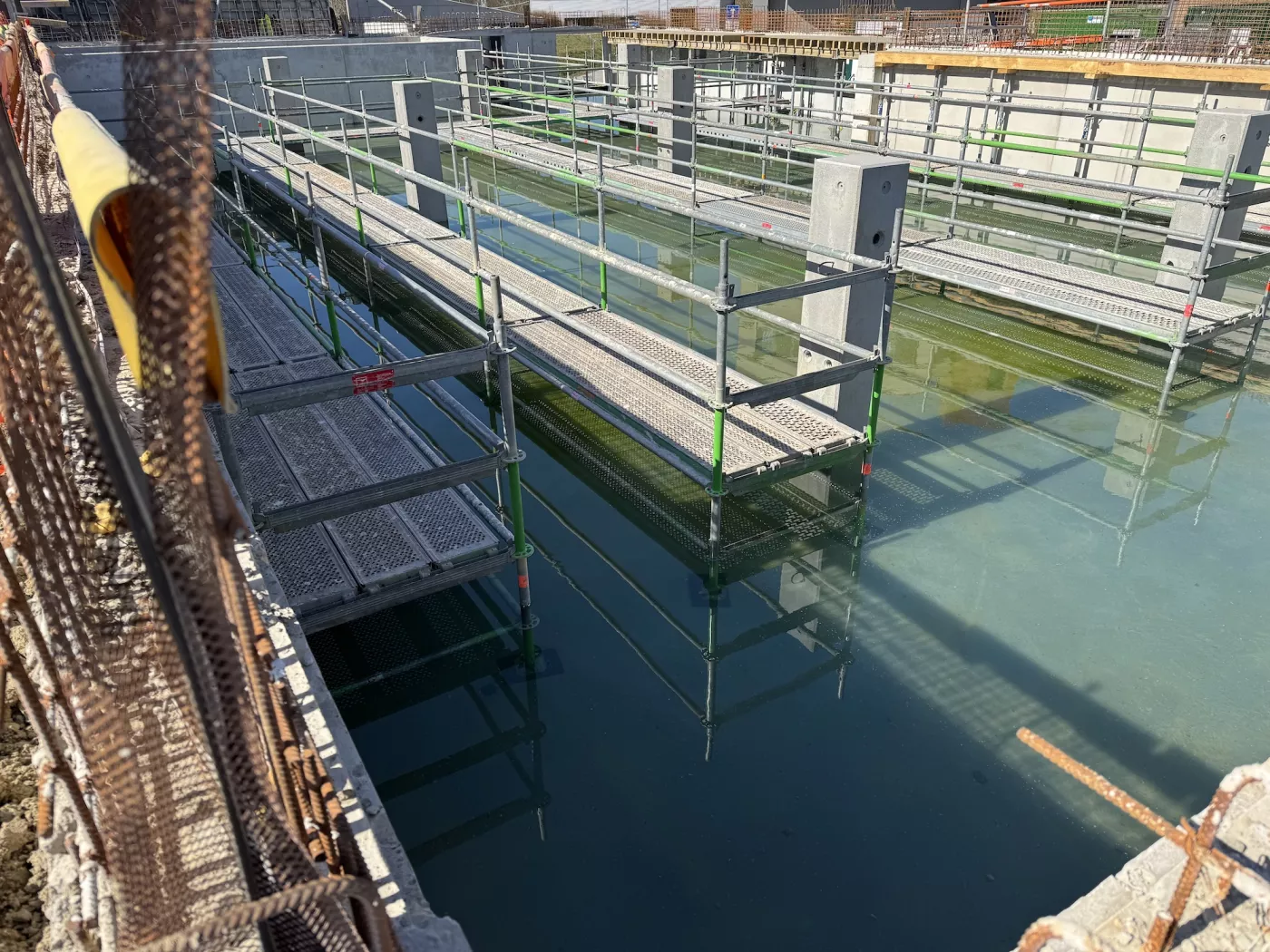
A basement sits in the ground, sometimes below the water table. A waterproof concrete basement keeps that water out with the concrete itself: the foundation slab and the retaining walls are the waterproofing. This works in new builds, with a crystalline admixture in the mix, and also in a basement that has been standing for years.
Why a concrete basement leaks
Concrete looks watertight, but it is full of fine pores and capillaries. If there is water against the basement, especially under pressure, it finds a way in along them. Hairline cracks caused by shrinkage or loading make that path shorter.
The weak points are well known: the construction joints between floor and wall, the formwork tie holes and bolt holes, pipe penetrations and honeycombing. To make a basement waterproof, you tackle the concrete and these details together.
Building a new basement waterproof
In new builds, you make the concrete waterproof when you mix it. Penetron Admix goes into the mix as a powder, at 0.8 to 1.0 per cent of the weight of the binders. With Admix SB, nothing has to be weighed on site: one soluble bag of 3 kg per cubic metre of concrete. It contains a green tracer. The water that rises to the surface during pouring and curing turns green, so you can see that the product really is in the mix.
According to the data sheet, concrete with Admix withstands extreme hydrostatic pressure, from both the positive and the negative side. Hairline cracks of up to 0.5 mm are sealed again as long as moisture is present.
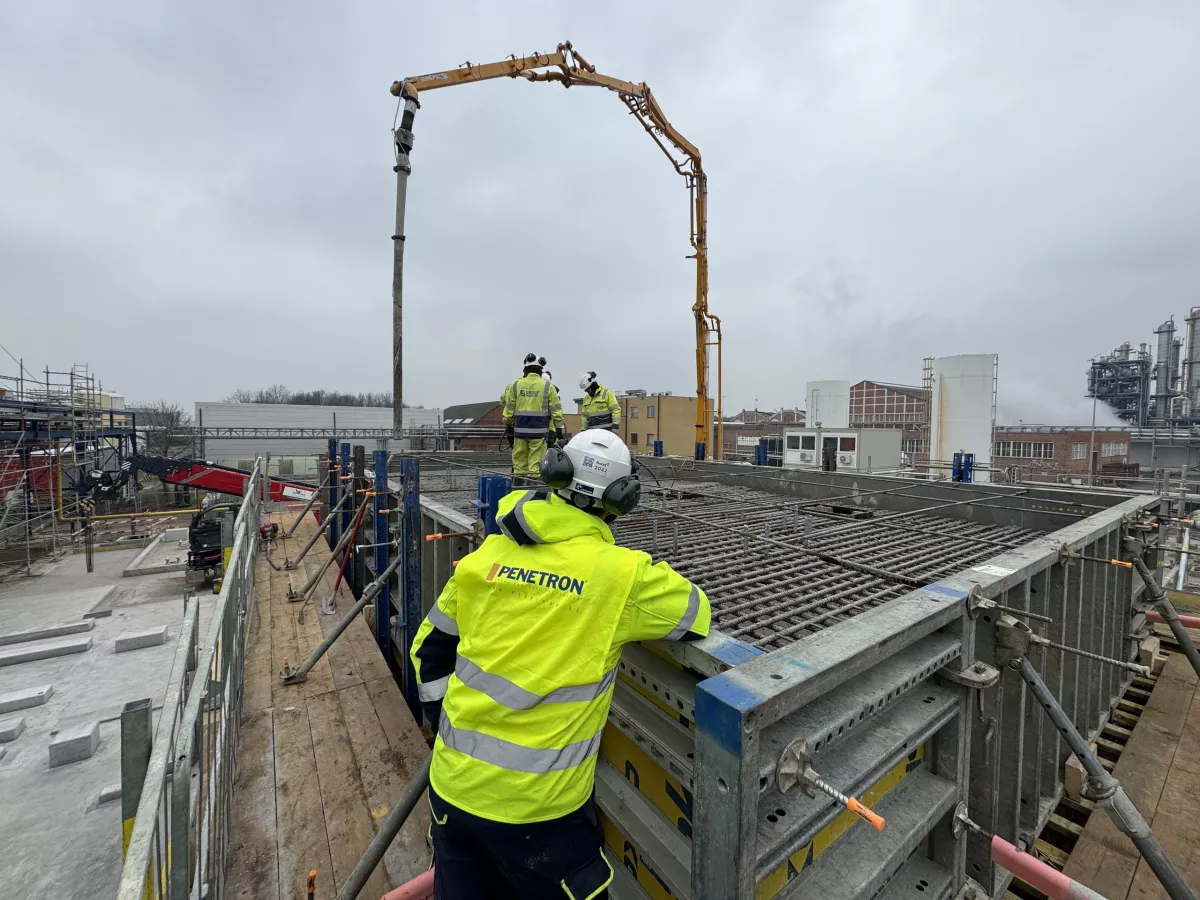
For the new foundation slab of PVS Chemicals in Ghent, 9.3 by 5.2 metres and 1 metre thick, Admix SB was added to the concrete on site. The dosage was matched to the cement content, approximately 3 kg per m³.
Sealing construction joints and pipe penetrations
Where two pours meet, a cold joint forms. It gets its own sealing, even if the concrete contains Admix. In the construction joints you place Penebar SW-55, a swelling waterstop made of butyl rubber and bentonite that expands in a controlled way on contact with water. The strip sits in the joint and seals it against the concrete, horizontally and vertically, and also around pipes, conduits, piles and steel beams.
First, Penebar Primer is applied to the concrete with a brush, in a strip at least 50 mm wide. You fit the strip while the primer is still tacky, and no later than 3 hours after it has dried. The strip is intended only for joints that do not move, and it must not be placed in standing water or on a frozen substrate.
Making an existing basement waterproof
If the basement is already built and water is coming in, you can work from the inside, on the damp concrete. The sequence is fixed:
- A leak that is still running is stopped with Peneplug. The mix is kneaded into a wedge, pressed into the leak and held in place for about 30 seconds until it hardens.
- Cracks, tie holes and honeycombing are chased out and filled with Penecrete Mortar, always together with Penetron Slurry. At the joints, you use the same mortar to form a cove.
- Penetron Slurry is applied with a brush or a sprayer to the clean, damp concrete, in two coats on the walls.
- After that, you keep the treated concrete damp for five days.
The slurry can be applied on the inside, the negative side, even when the water pressure comes from outside. If water comes in through cracks deep in the wall, Penetron Inject can fill them. This is a crystalline injection mortar that may also be injected in damp or wet zones.
In practice: the basement at KU Leuven
For the extension of the greenhouse complex of KU Leuven in Heverlee, contractor Denys built an underground basement with foundation slabs and basement walls. The groundwater level there is high. That is why Penetron Admix SB went into the concrete of the slabs and the walls, about 530 m³ in total.
The joints received Penebar SW-55 with Penebar Primer. Penetron Slurry and Penecrete Mortar were specified as an option, for local concrete defects and to seal tie holes. During mixing and installation, Penetron Benelux provided technical support on site. The result is a structurally waterproof whole, even under fluctuating groundwater pressure, without additional membranes.
Questions
How do you make a basement waterproof with concrete?
By making the concrete itself waterproof. In new builds, Penetron Admix or Admix SB goes into the concrete mix and the construction joints get a swelling waterstop. In an existing basement, Penetron Slurry is applied to the damp concrete after leaks and cracks have been repaired.
Can I make an existing basement waterproof from the inside?
Yes. Penetron Slurry can be applied on the negative side of the concrete, so on the inside of the basement wall. A leak that is still running is stopped first with Peneplug.
What does a waterproof basement cost?
That depends on the volume of concrete, on whether it is new build or repair, and on the water pressure. The calculator on the Penetron Admix page works out how much product you need. You can get a price for your project from an adviser at Penetron Benelux.
Does this also work for a masonry basement?
For block, brick and stone there is Penetron Seal Coat, a cement-based waterproof coating. It is not intended for negative side waterproofing where water is under pressure. In that case, ask for advice.
How does self-healing concrete help in a basement?
If a hairline crack of up to 0.5 mm forms later and water reaches it, the crystals become active again and the crack seals once more. A wider crack must be repaired first.
Which solutions does Penetron offer for basement waterproofing?
For new builds, Penetron Admix or Admix SB goes into the concrete mix, with Penebar SW-55 and Penebar Primer in the construction joints. In an existing basement, you use Peneplug for leaks, Penecrete Mortar for cracks and Penetron Slurry on the concrete.
How do you prevent moisture problems in concrete basements?
By treating the concrete and the weak points together: construction joints, tie holes, pipe penetrations and honeycombing. In new builds, Penetron Admix makes the concrete waterproof, and the construction joints receive a swelling strip such as Penebar SW-55.
The products
For a waterproof basement
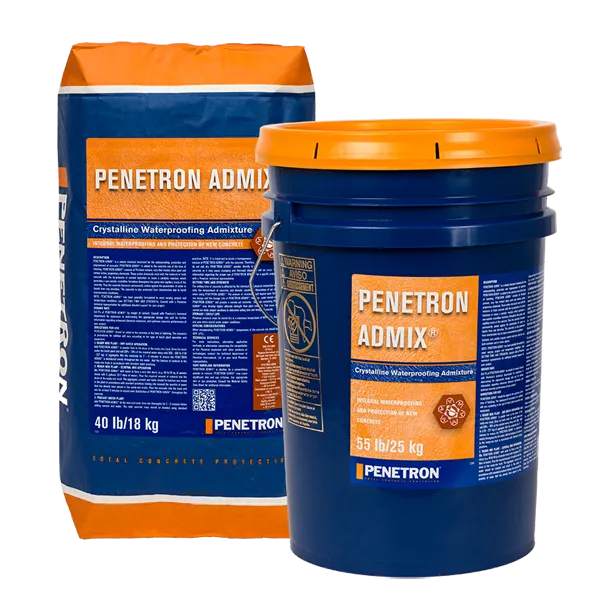 Penetron AdmixCrystalline powder, added during concrete production
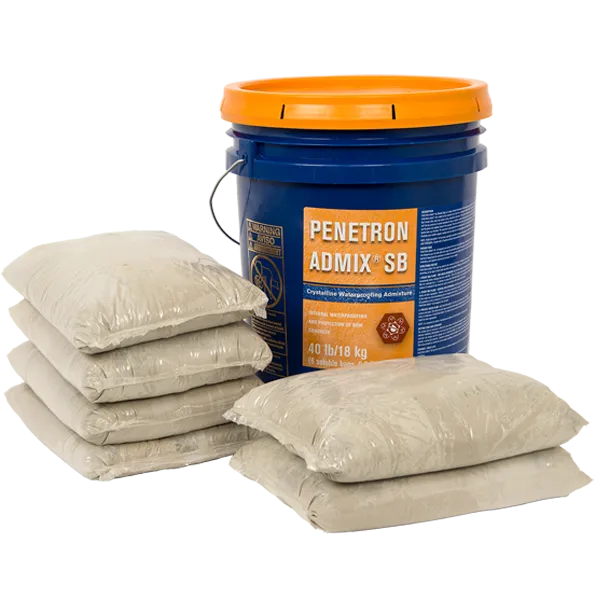 Penetron Admix SBCrystalline powder in a pre-dosed soluble bag
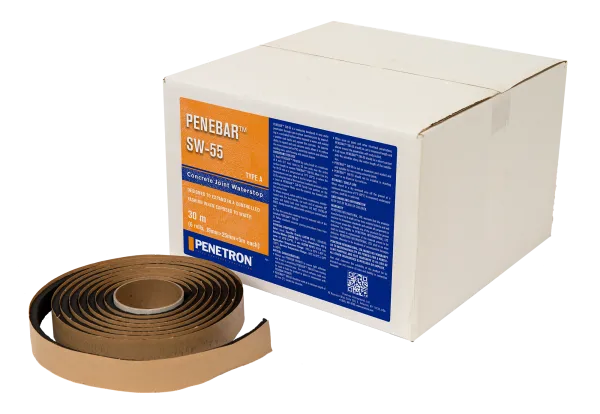 Penebar SW-55Standard swellable strip, most widely used
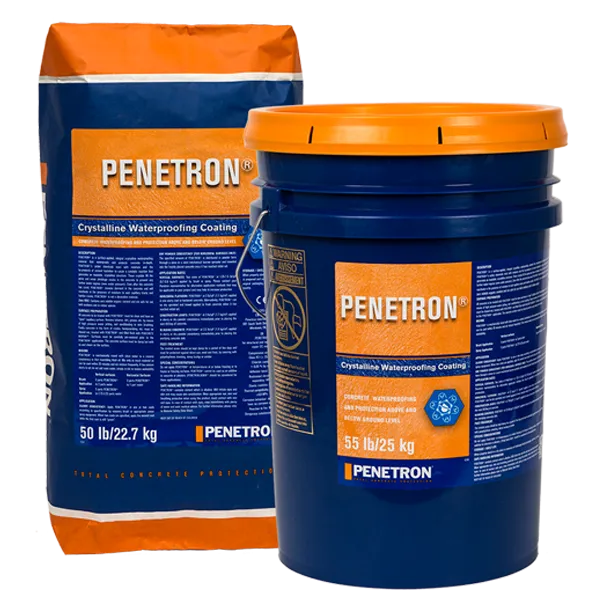 Penetron SlurryCrystalline slurry, applied by brush or spray
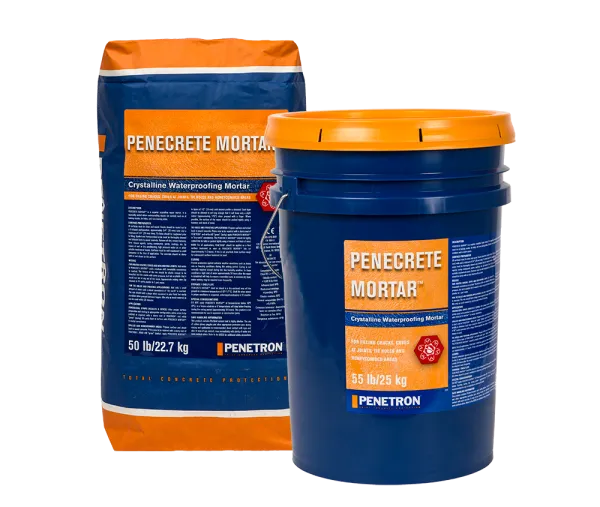 Penecrete MortarCrystalline repair mortar, always used together with Penetron Slurry
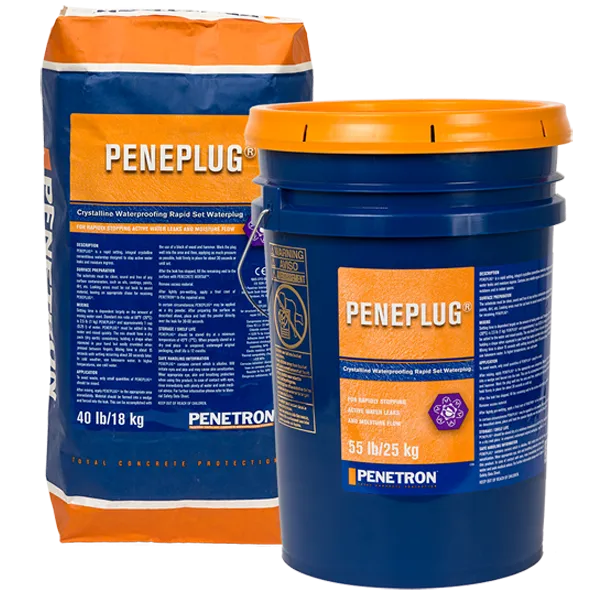 PeneplugSets about 30 seconds after mixing

Contact
Discover how Penetron can strengthen your next construction project
Tell us about your project. We will help you choose the right product.