

More about concrete
Self-sealing concrete: how a hairline crack closes itself
Self-sealing concrete closes hairline cracks up to 0.5 mm by itself, every time water gets in. Here you can read what happens in such a crack, what the concrete needs for it and where it stops.
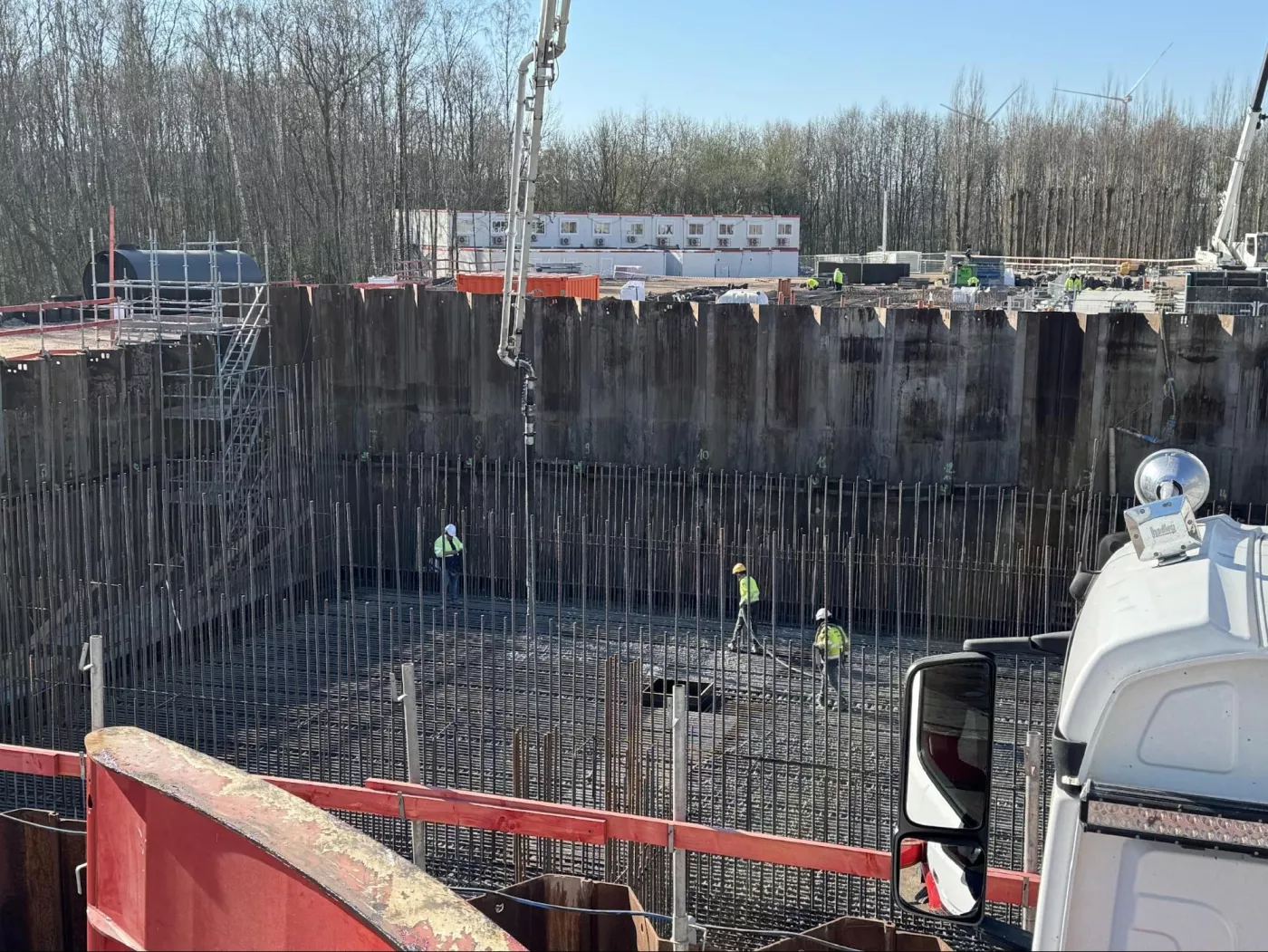
A hairline crack in concrete is usually not a disaster, but it is a path for water. In self-sealing concrete that path closes by itself: as soon as water enters the crack, crystals grow and fill it. At Penetron this is done with crystalline waterproofing, in the concrete mix or on the surface.
What happens in a hairline crack
When water enters a crack, the active ingredients of Penetron dissolve. They react with the free lime in the concrete and form microscopic crystals that no longer dissolve. These grow in the crack and in the pores and capillaries around it, until the water can no longer find a way through. You can read how these crystals form under the system.
The concrete continues to breathe: water vapour can still pass through the structure, liquid water cannot. No layer forms on the surface that has to stay attached.
What the concrete needs for it
Water, to begin with. Without moisture the ingredients stay inactive and nothing happens. If more water arrives later, for example through a new hairline crack, they become active again and the crystals keep growing.
The crack must not be too wide either. Penetron closes hairline cracks up to 0.5 mm. A wider crack is repaired first, for example with Penecrete Mortar, the crystalline mortar for cracks and joints, together with Penetron Slurry. A crack that moves or results from settlement should first be assessed by an engineer. You can read more about small cracks under microcracks in concrete.
New or existing concrete
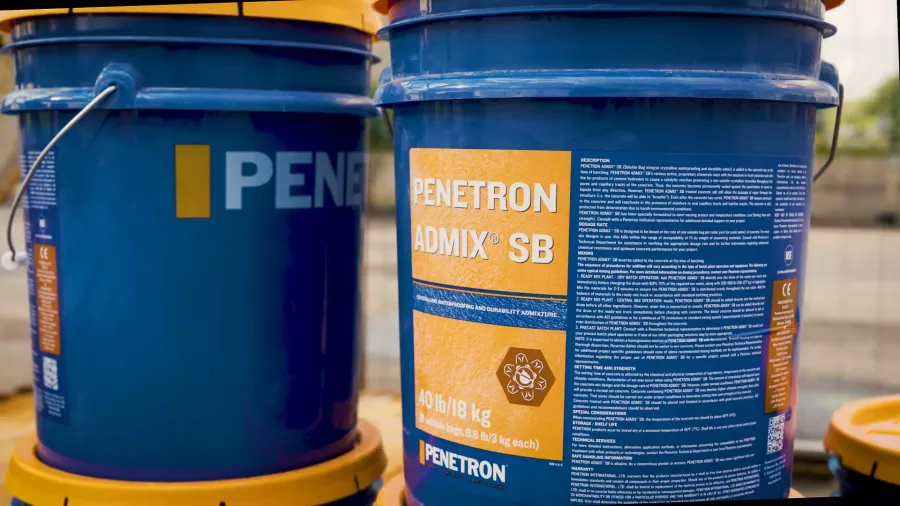
In new concrete, Penetron Admix goes into the concrete mix. The sealing capacity is then present throughout the whole mass, including for small cracks that only form later. The admixture goes into the mix as a powder, in dissolvable bags (Admix SB) or as a liquid (Admix Liquid).
On existing concrete, Penetron Slurry is applied to the surface with a brush or spray. The product penetrates the concrete and forms the same crystals there. If there is already an active leak, Peneplug stops the water first; deeper cracks can be filled with Penetron Inject.
What it means for maintenance
A hairline crack that closes by itself does not have to be tracked down before water gets through. That matters most where concrete is hard to reach: a basement wall behind the soil, a tunnel or a reservoir. The protection is in the concrete itself and remains part of it. If you are unsure about a crack you see, an adviser from concrete repair will gladly look at it with you.
Questions
What is self-sealing concrete and how does it work?
Self-sealing concrete closes hairline cracks up to 0.5 mm by itself, every time water gets in. The active ingredients of Penetron then dissolve, react with the free lime and form crystals that fill the crack and the pores around it.
Up to what width does a crack close by itself?
Hairline cracks up to 0.5 mm close with the crystals of Penetron. A wider crack is repaired first, for example with Penecrete Mortar.
Does self-sealing concrete also work without water?
No. Without moisture the ingredients in the concrete stay inactive. If water arrives later, they become active again and the crystals keep growing.
Is self-sealing the same as self-healing concrete?
Yes. Self-sealing, self-healing and self-repairing are three terms for the same thing: concrete that closes small cracks by itself. At Penetron this is done with crystals.
Can a structural crack be sealed this way?
No. A crack that moves or results from settlement should first be assessed by an engineer. You then choose the right repair together with an adviser.
Which techniques are used for self-sealing concrete?
Penetron uses crystalline waterproofing, in the concrete mix or on the surface. In new concrete, Penetron Admix goes into the mix; on existing concrete, Penetron Slurry is applied with a brush or spray.
Is self-sealing concrete more expensive than traditional concrete?
That depends on the project and on what is no longer needed thanks to the waterproofing in the concrete itself, such as a separate membrane or a coating. An adviser from Penetron Benelux will look at the costs for your project.
How effective is self-sealing concrete in wet environments?
Water is exactly what activates the ingredients: the crystals grow in the crack until the water can no longer find a way through. This applies to hairline cracks up to 0.5 mm. A wider crack is repaired first, for example with Penecrete Mortar.
What are examples of projects with self-sealing concrete?
Among others the biotanks of Indaver in Antwerp, the Aquarium Mar de Cortés in Mazatlán and Jewel at Changi Airport in Singapore, each with Penetron Admix in the concrete. More projects can be found under projects.
Also read
More about concrete and waterproofing
 About the technologyHow Penetron's crystalline technology waterproofs concrete from within, in the mix or on …
 Microcracks in concreteMicrocracks in concrete look harmless, but let in water and salts. Here is how they form …
 Concrete repairConcrete repair with Penetron: identify the cause first, then remove loose concrete and …
 ApplicationsNine Penetron applications in two groups: basements, floors, swimming pools and repair, …
Contact
Discover how Penetron can strengthen your next construction project
Tell us about your project. We will help you choose the right product.