

Technology
Crystalline waterproofing: how crystals seal concrete
With crystalline waterproofing, the protection is in the concrete itself. With moisture, crystals grow in the pores, the capillaries and in hairline cracks up to 0.5 mm.
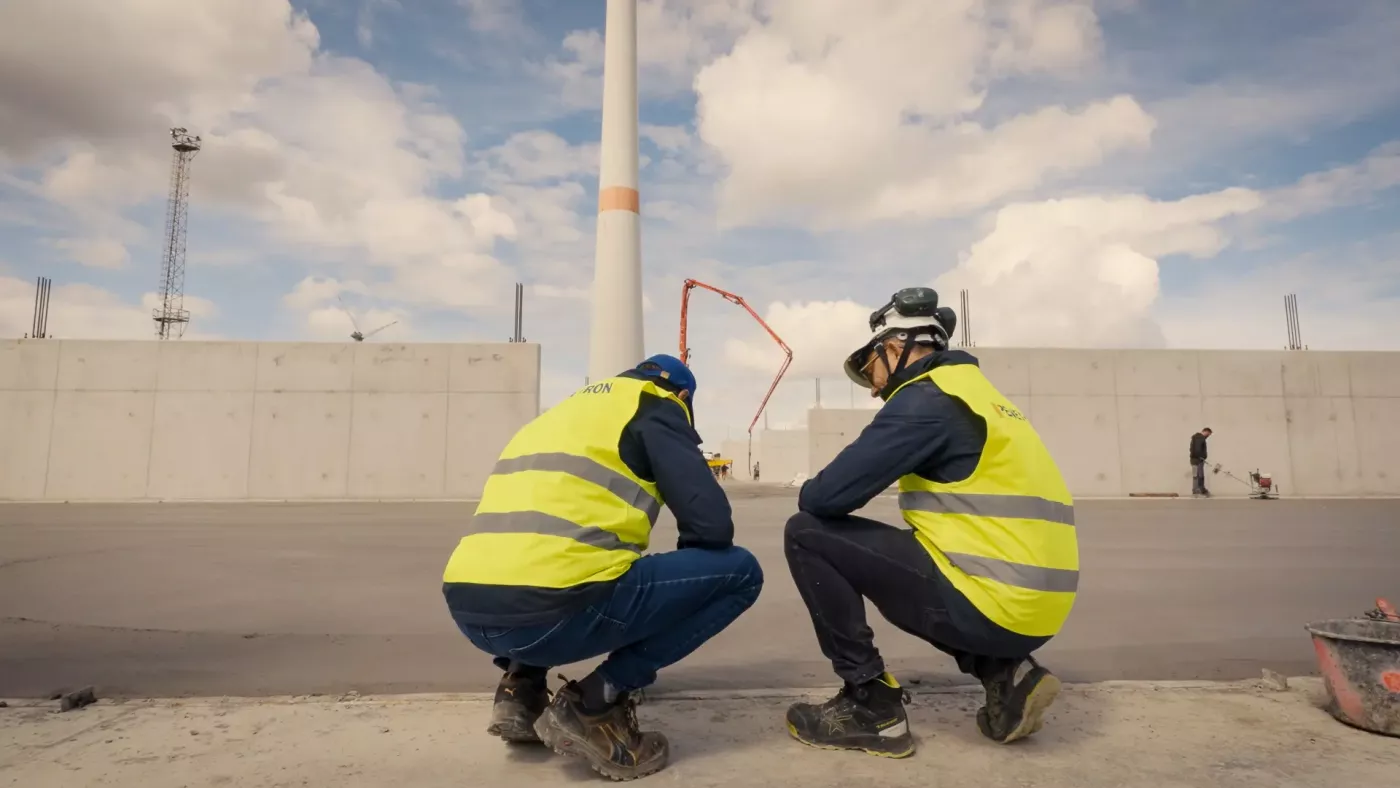
Concrete looks dense, but it is full of fine pores and capillaries along which water is drawn in. Crystalline waterproofing closes off that route in the concrete itself, without a layer on top. Penetron Benelux in Herentals supplies the system for new concrete, in the mix, and for concrete that is already in place.
What happens in the concrete
The active chemicals in Penetron react with moisture and with the by-products of cement hydration. That reaction forms a crystalline structure that does not dissolve. The crystals fill the pores, the capillaries and small shrinkage cracks, so water cannot penetrate any further, even under pressure.
Vapour can still pass through. The concrete therefore keeps breathing, as the technical data sheet puts it.
If there is no water, the chemicals stay dormant in the concrete. If a hairline crack forms later and moisture reaches it, they become active again and that crack also seals. That is why we speak of self-healing concrete.
In the concrete mix or on the surface
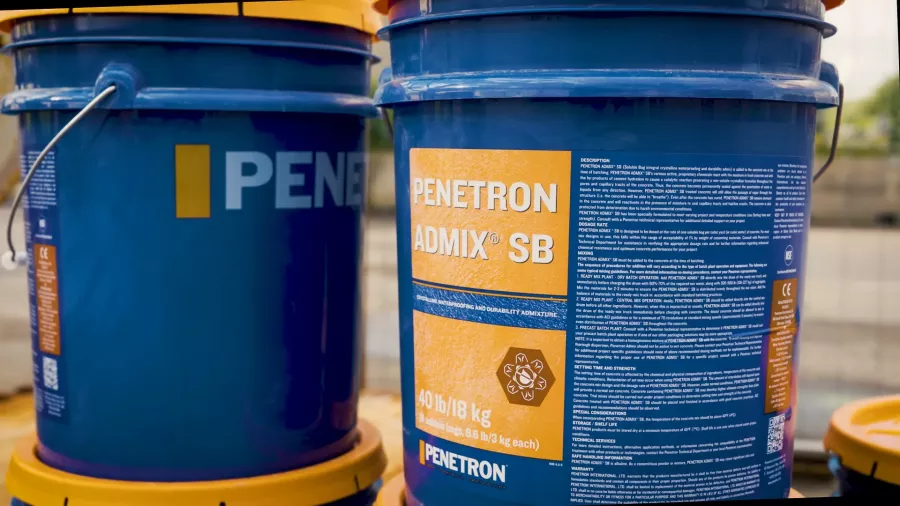
With new concrete, the crystalline chemicals go into the mix. Penetron Admix is a powder added at batching, at 0.8 to 1.0 per cent of the weight of the cementitious materials. Penetron Admix SB is the same powder, pre-weighed in a 3 kg dissolvable bag: one bag per cubic metre of concrete. For the ready-mix concrete plant there is also a liquid form, Penetron Admix Liquid.
On existing concrete, Penetron Slurry is applied by brush or spray machine. This can be done on the water side or on the opposite side. Cracks, joints and honeycombing are first routed out and filled with Penecrete Mortar, always together with the slurry. If a leak is still letting water through, you stop it first with Peneplug.
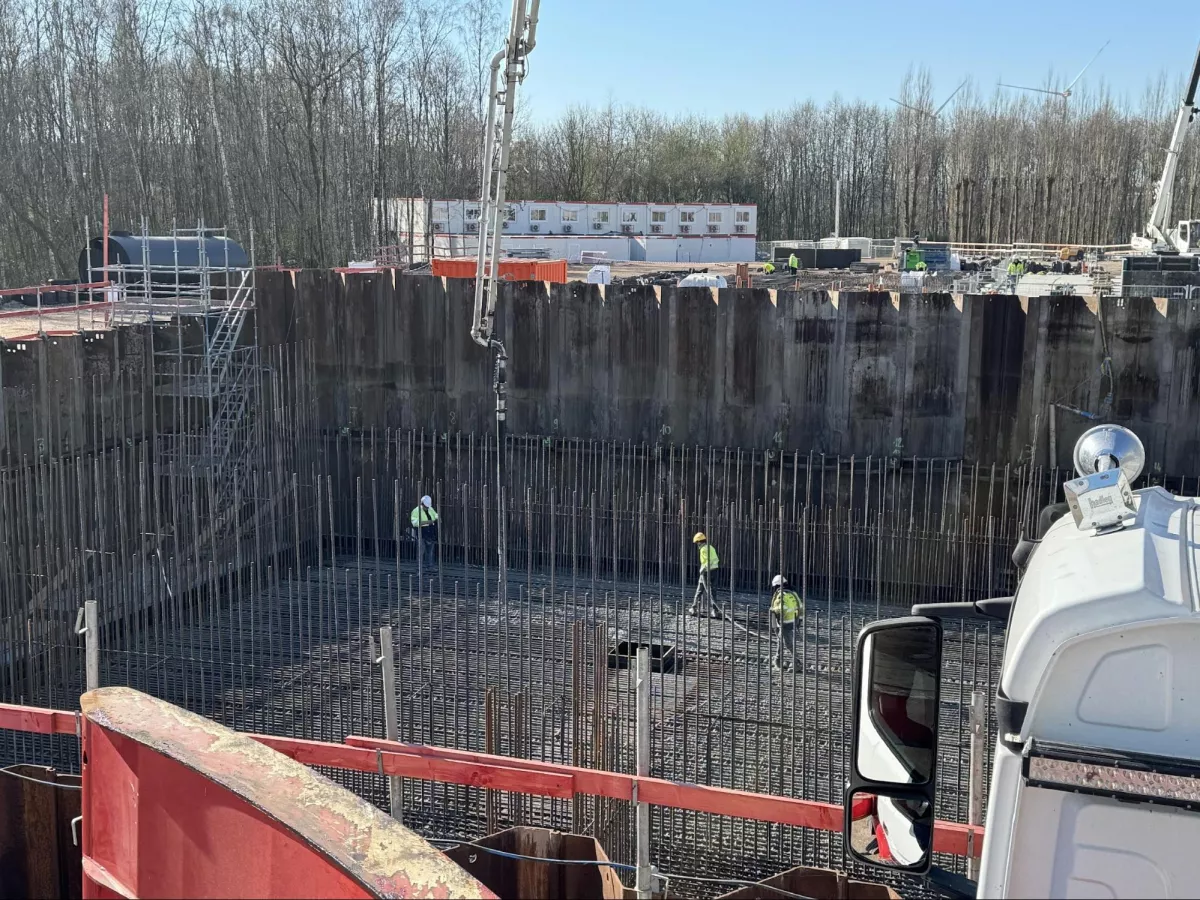
Two Belgian sites show both approaches. For the sludge bunker of Aquafin in Ghent, Penetron Admix SB was added at the ready-mix concrete plant to the concrete of the foundation slab and the walls. In the pump pits of the Beveren Tunnel, around 2,600 m² of existing concrete received Penetron Slurry, in two coats on the walls.
What the crystals need
Without water, nothing grows. For the slurry, the concrete must be clean, with open capillaries: laitance, dirt and grease are removed first by high-pressure water jetting, wet blasting or a wire brush. You then wet the surface thoroughly. It must be damp, but it must not shine.
After application, you keep the concrete damp for five days and protect it from sun, wind and frost, for example with plastic sheeting or wet hessian. The slurry is not applied in freezing weather or on frozen concrete. With Admix, the concrete mix must be warmer than 4 °C.
Water pressure and chemical attack
According to the data sheet, Penetron Slurry is fully effective against high hydrostatic pressure. The product resists chemical attack with constant contact from pH 3 to 11 and with intermittent contact from pH 2 to 12. It also protects against freeze-thaw, aggressive groundwater, seawater, carbonates, chlorides, sulphates and nitrates, and it protects the steel in the concrete.
Because the protection is in the concrete, it keeps working if the surface is damaged. There is no layer that can come loose or be punctured. When backfilling or fixing reinforcement, you do not need to shield the treatment.
Where the limit lies
The data sheets of Penetron Slurry, Penetron Admix and Admix SB mention hairline cracks up to 0.5 mm. A wider crack is repaired first, with Penecrete Mortar and Penetron Slurry. That is how it was done at the cooling tower of Aperam in Genk: there, all cracks wider than 0.5 mm were dealt with in this way.
Joints that need to move, such as expansion joints, call for a different approach. The data sheet of Penecrete Mortar advises against using the mortar there. And one product does not waterproof an entire structure by itself. Whether a basement or tank stays dry also depends on the concrete quality, the construction joints and waterstops, the formwork ties and pipe penetrations, honeycombing, the workmanship and the curing.
Questions
How wide can a crack be for it to seal by itself?
Up to 0.5 mm, according to the Dutch-language technical data sheets of Penetron Slurry, Penetron Admix and Penetron Admix SB. A wider crack is first routed out and repaired with Penecrete Mortar and Penetron Slurry.
Can I treat a basement from the inside?
Yes. Penetron Slurry can be applied to the positive or the negative side of the concrete, so also on the inside when the water presses against the wall from outside.
Can concrete with crystalline waterproofing still breathe?
Yes. The crystals hold back water, but vapour can still pass through the concrete. This is stated in the data sheets of Penetron Slurry and Penetron Admix.
Is crystalline waterproofing a coating?
No. The Penetron data sheet states that the product must not be confused with a coating or a membrane. It works within the pores and capillaries of the concrete.
Can Penetron Slurry be added to the concrete mix?
No. The slurry is not intended as an admixture for concrete or plaster. For concrete that is still to be poured, there is Penetron Admix.
Also read
More about concrete and waterproofing
 Crystalline or membraneCrystalline or membrane: the difference between waterproofing in the concrete itself and …
 Self-healing concreteSelf-healing concrete with Penetron: crystals grow in the pores and hairline cracks when …
 Standards and certificatesStandards and certificates from Penetron: CE marking with EN 934-2 for Admix and EN 1504 …
Contact
Discover how Penetron can strengthen your next construction project
Tell us about your project. We will help you choose the right product.