
Application
Repair of existing concrete: cracks, leaks and concrete rot
In concrete repair, the cause comes first, then the repair and then the protection. Penetron Benelux works with crystalline mortars and slurry, which also make the repaired concrete waterproof straight away.
A crack, a damp patch or crumbling concrete shows that water, salts or chemicals have found their way into the concrete. Anyone repairing concrete therefore starts by finding out where the damage comes from. Only then do you choose the repair and the protection that suit it.
First, the cause of the damage
Cracks in concrete have various causes: shrinkage and temperature changes, errors in the workmanship or in the mix, loading or movement, and chemical reactions in the concrete itself. Crystalline material can seal shrinkage cracks and hairline cracks of up to 0.5 mm. Settlement cracks and other structural cracks are a different matter: an engineer should look at those first.
If you leave cracks open, water, chemicals and frost penetrate further. The reinforcement is attacked and the concrete crumbles. This is what is known as concrete rot, and the later the repair starts, the greater the damage.
Stopping a leak and sealing cracks
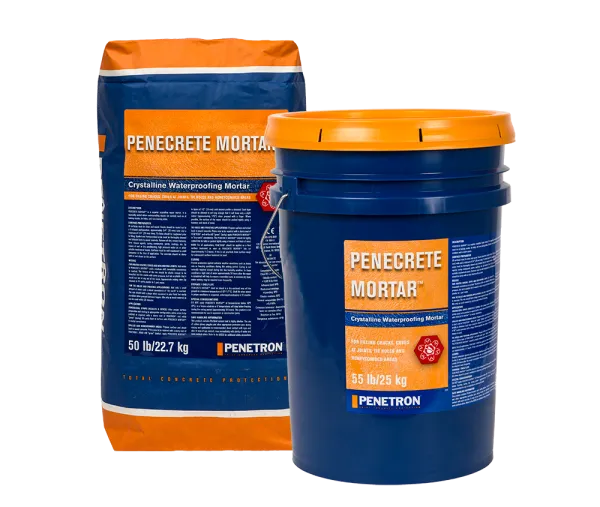
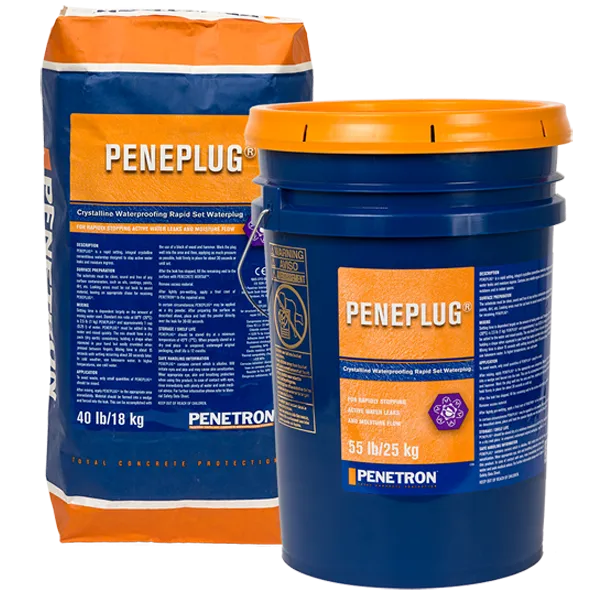
If a crack or a joint is still leaking, you first stop it with Peneplug. It sets about 30 seconds after mixing and can also be used under water. The crack is then chased out and filled with Penecrete Mortar, always together with Penetron Slurry. According to the data sheet, the mortar seals cracks of up to 0.5 mm.
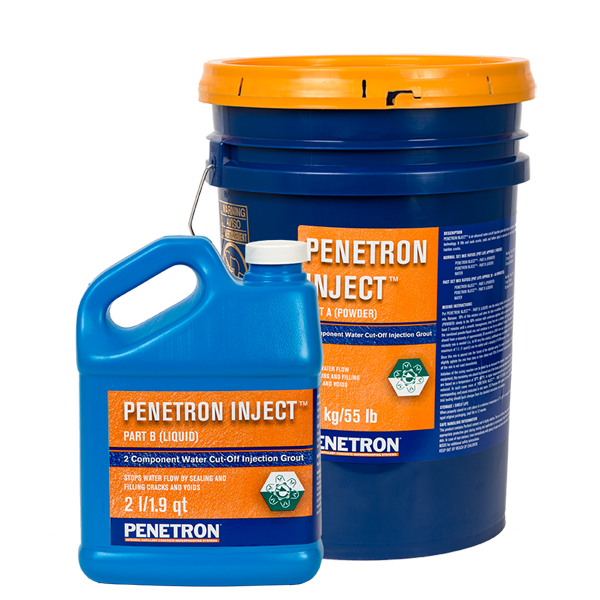
If the cracks run deep into the wall or there is a void, Penetron Inject can be used. This injection grout has a very low, water-like viscosity, so it penetrates fine cracks. The crystals seal the crack and the pores in the surrounding concrete, and the product protects the steel in the zone around the injection point.
Repairing crumbling concrete and concrete rot
With concrete rot, the loose and damaged concrete is removed first, back to a sound substrate. The reinforcement is cleaned and, where necessary, treated against corrosion. You then rebuild the concrete with a repair mortar that has at least the same compressive strength as the original concrete, with good bond and correct curing.
Which mortar is right depends on the location. For vertical and overhead repairs there is Penetron V/O Patch, which does not sag and bonds well to concrete and reinforcement. Horizontal surfaces that need to return to service quickly are repaired with Penetron Quick Patch. Voids under plates, anchors and machine bases are filled with Penetron Grout, a non-shrink grout.
After the repair, Penetron Slurry can protect the concrete, as on the sites below. According to the data sheet, the slurry also falls under EN 1504-7, the standard for corrosion protection of reinforcement.
Two Belgian sites: Kaneka and Aperam
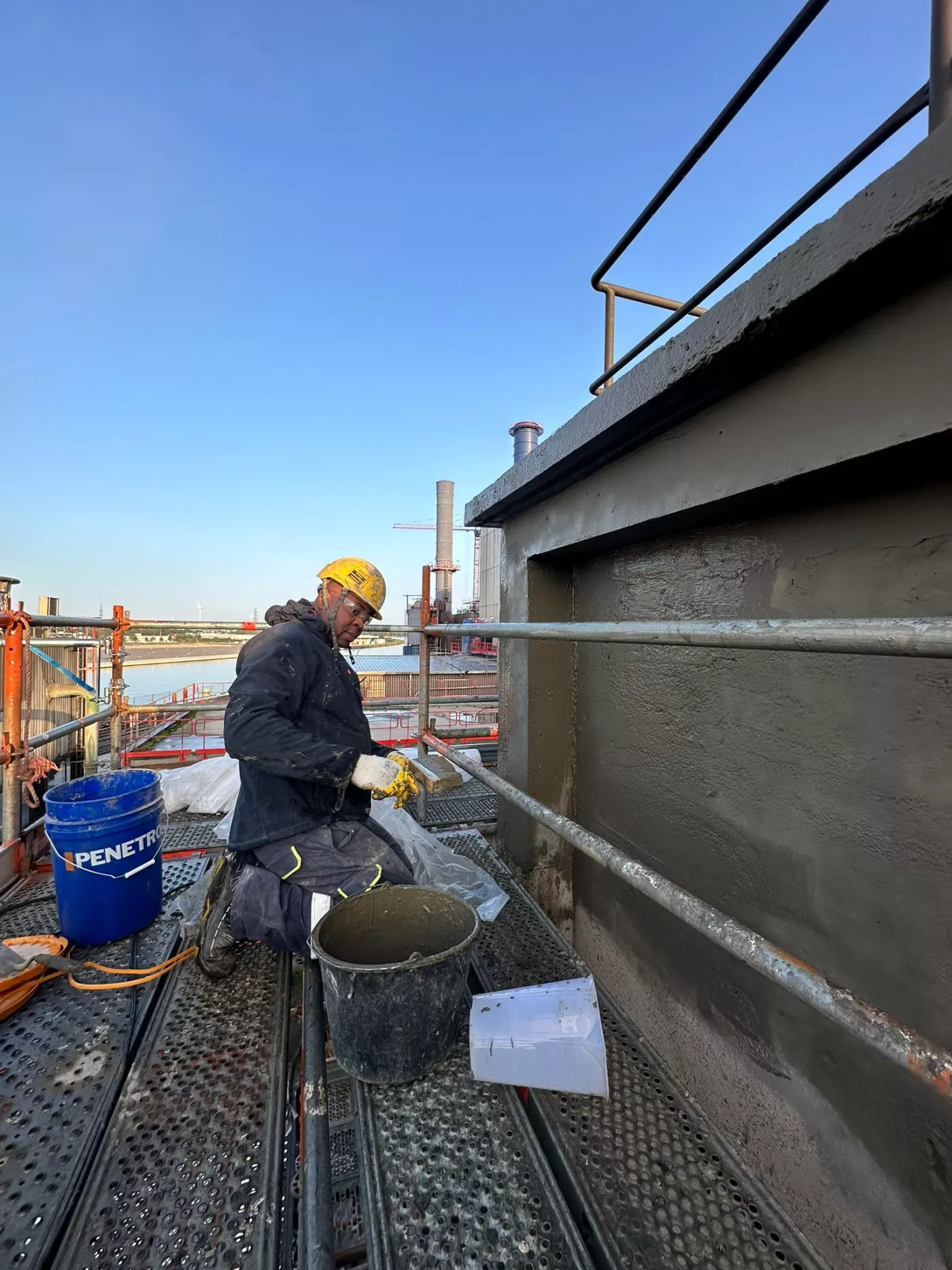
At Kaneka Belgium in Westerlo, a settling tank was renovated inside and out. First the substrate was cleaned and sounded, and the repair zones were cut out. Cracks and honeycombing were repaired with Penecrete Mortar. Penetron Slurry was then applied in two coats, wet on wet, on the inside and the outside, on the inside up to a height of 2.44 metres. The treated surfaces were cured for three days.
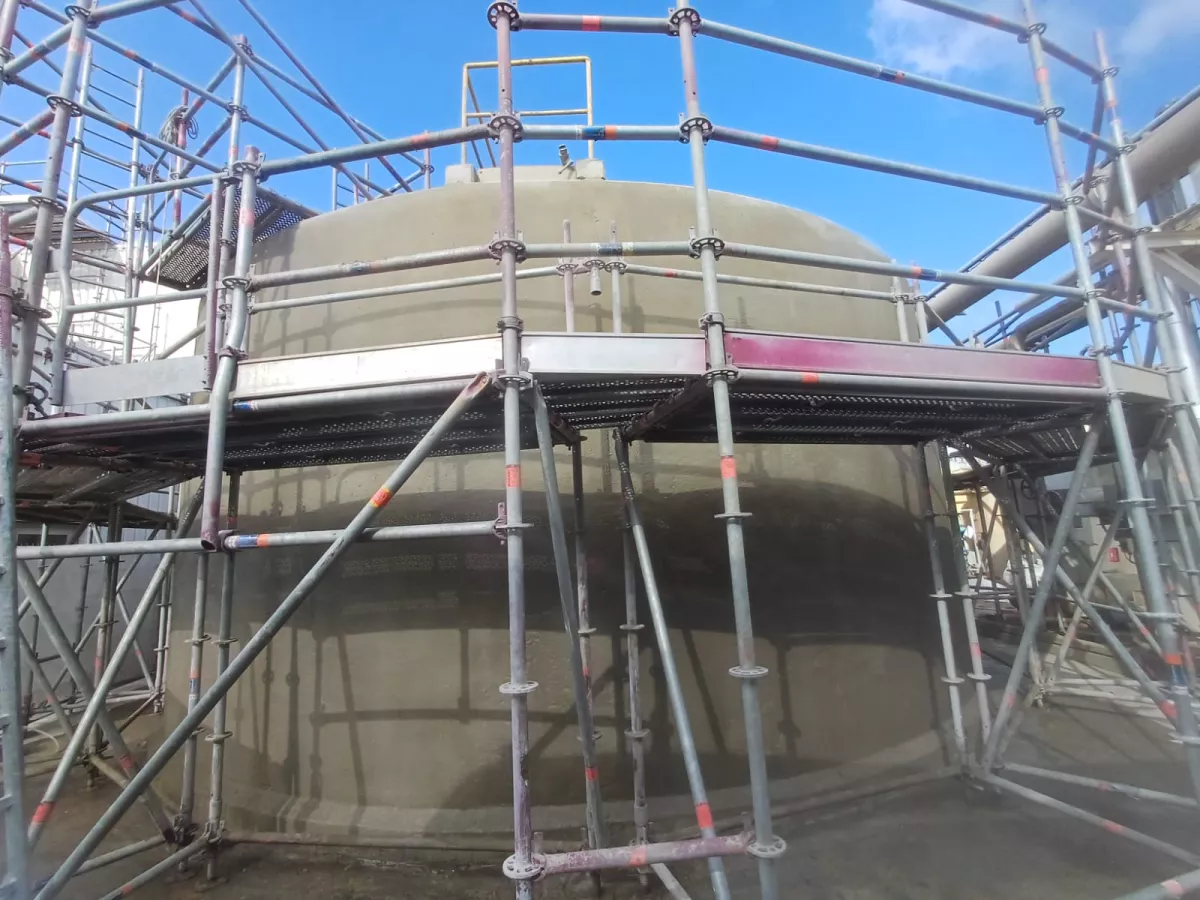
After years of use, the cooling tower at Aperam in Genk had serious concrete damage, cracks and leaks, and the reinforcement was rusting. All cracks wider than 0.5 mm were repaired with Penetron Slurry and Penecrete Mortar. In some places Penetron Inject was injected, and the whole tower then received two coats of Penetron Slurry. Production at Aperam simply carried on during the works.
Expansion joints and cracks that move
Not every crack or joint should be sealed by crystal growth. An expansion joint has to be able to move, and crystalline mortars do not belong in it: the data sheets for Penecrete Mortar and V/O Patch advise against this. The swelling strip Penebar SW-55 is also intended only for joints that do not move. For expansion joints, the data sheet for Peneseal Pro names separate joint products, such as elastomeric sealants.
If you are unsure whether a crack is still moving, have it assessed first. An adviser from Penetron Benelux will work out with you which repair is right.
Questions
How do you repair a crack in concrete?
A crack that is still leaking is first stopped with Peneplug. The crack is then chased out and filled with Penecrete Mortar, together with Penetron Slurry. Deep cracks and voids can be injected with Penetron Inject.
Are cracks in concrete dangerous for the structure?
That depends on the cause. Hairline cracks and shrinkage cracks mainly let in water, chemicals and frost. Settlement cracks and other structural cracks should first be assessed by an engineer.
What is concrete rot and how do you repair it?
Concrete rot occurs when water, salts and chemicals attack the reinforcement, causing the concrete to crumble. The loose concrete is removed, the reinforcement is cleaned and the concrete is rebuilt with a repair mortar that is at least as strong as the original.
Can I seal an expansion joint with Penecrete Mortar?
No. The data sheet advises against Penecrete Mortar for expansion joints and other joints that need to be able to move. An expansion joint requires an elastic seal.
Can the repair be carried out while an installation stays in operation?
Sometimes it can. The cooling tower at Aperam in Genk was repaired without stopping production. Whether that is possible in your case depends on the location and accessibility.
The products
For the repair of existing concrete
Contact
Discover how Penetron can strengthen your next construction project
Tell us about your project. We will help you choose the right product.