
Application
Concrete for water treatment plants
In a water treatment plant, concrete is permanently exposed to aggressive water, and in some zones bacteria produce acid. Penetron has crystalline admixtures for waterproof concrete, and Biomic and Arc to protect against acid attack.
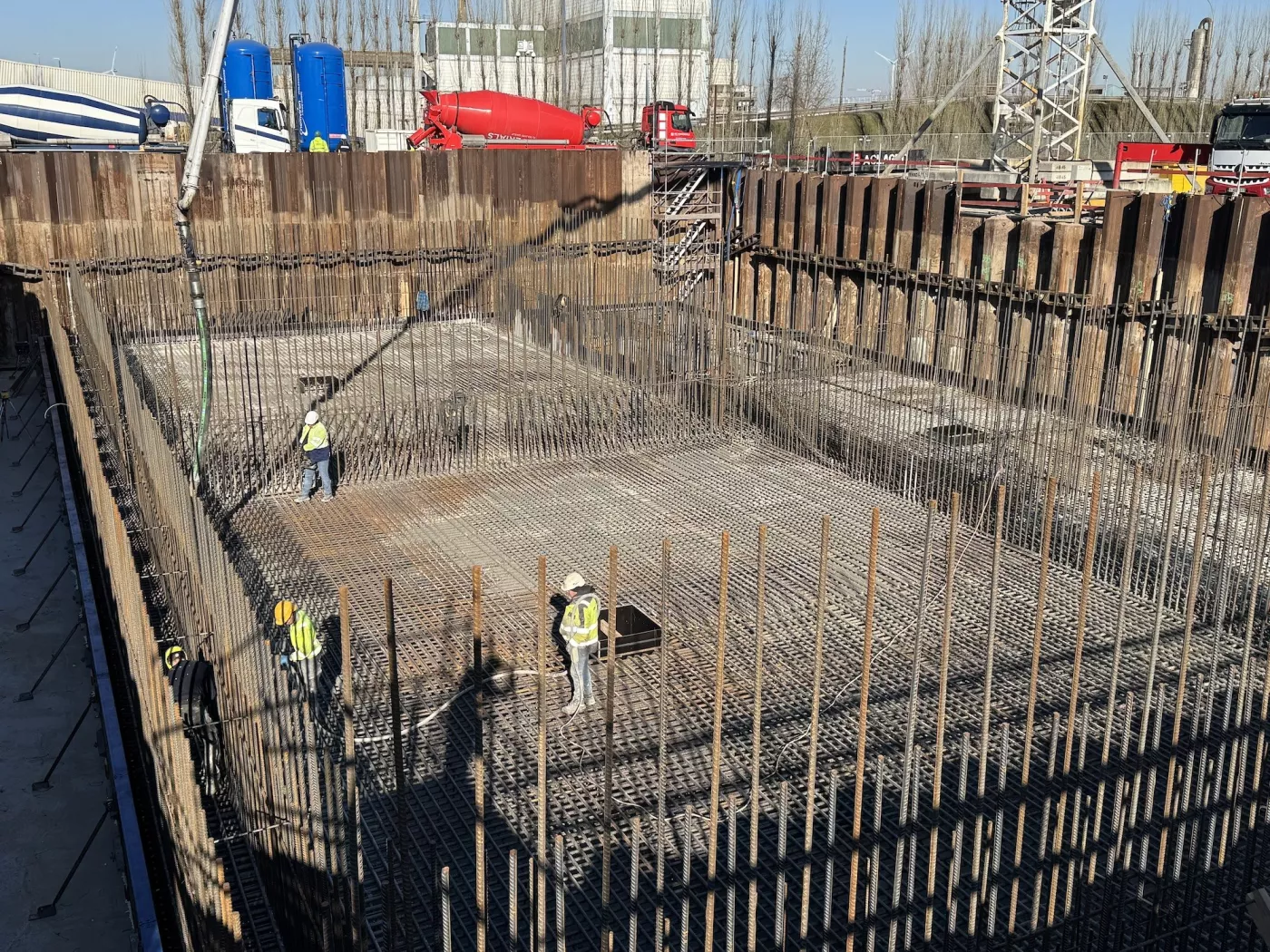
A water treatment plant consists of basins, tanks and bunkers that are rarely dry. The water is aggressive, and where wastewater stands without oxygen, bacteria can produce sulphuric acid that attacks the concrete. A plant that has to last a long time therefore needs concrete that is waterproof and can resist that attack.
Waterproof concrete for basins and bunkers
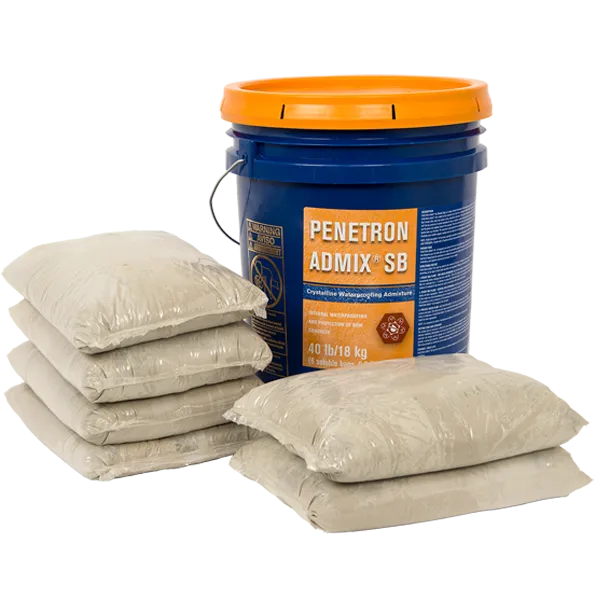
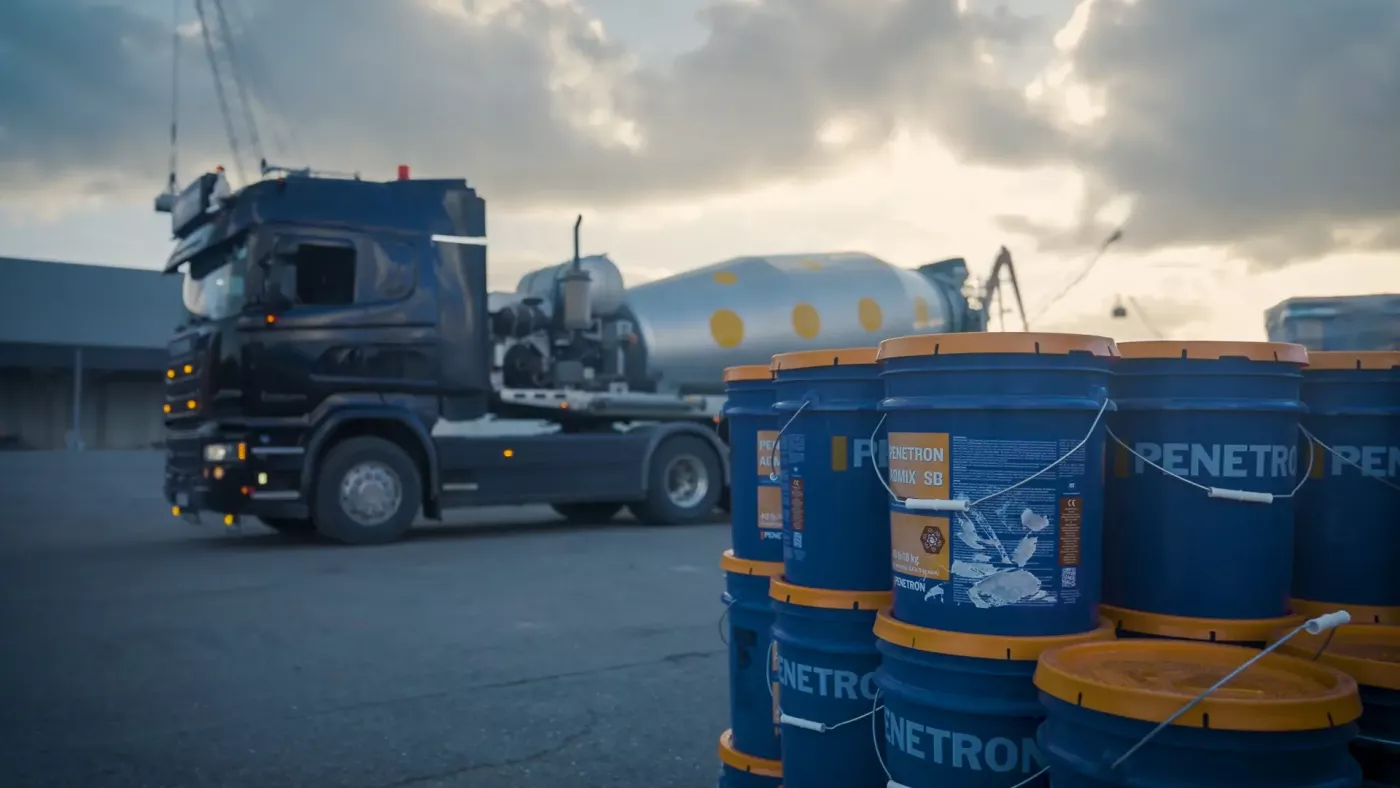
For new structures, Penetron Admix or Admix SB is added to the concrete at batching. Sewage and water treatment plants are listed under applications on the technical data sheet. According to the same data sheet, the concrete is highly resistant to aggressive chemicals, and hairline cracks up to 0.5 mm are sealed again later as long as moisture is present. The construction joints get a swellable waterstop, such as Penebar SW-55.
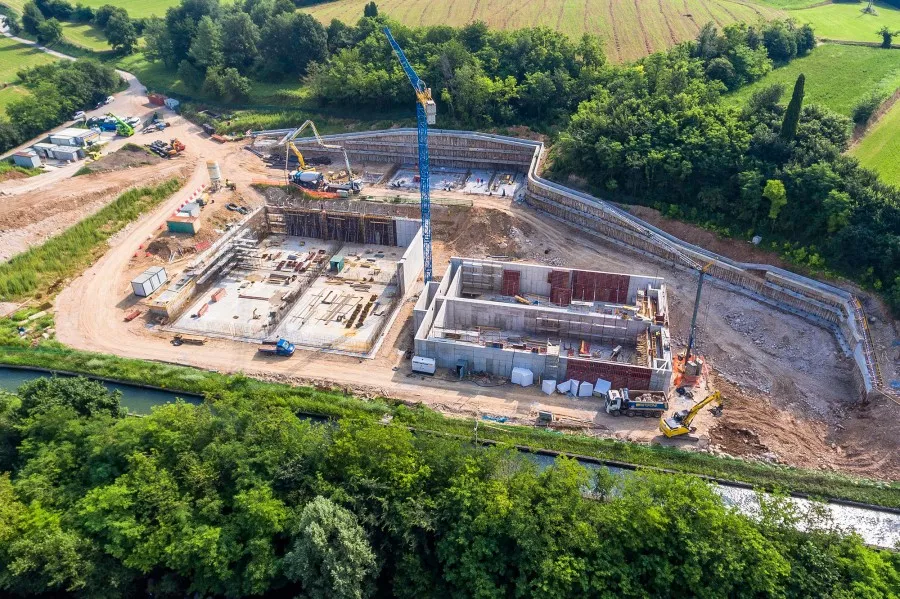
In Gavardo, Italy, Admix was specified for all concrete structures of the municipal wastewater treatment plant that come into contact with moisture and the aggressive effluent. The plant has two parallel treatment lines, including oxidation and denitrification tanks, settling tanks and a sludge line.
Aquafin's sludge bunker in Ghent
Aquafin builds and manages the water treatment infrastructure in Flanders. In Ghent it had a concrete bunker almost 40 metres high built, for sludge up to 20 metres high. BESIX raised it using slipforming and a continuous concrete pour, day and night, with AC Materials as concrete supplier and BM Engineering as engineering consultant.
Sludge up to 20 metres high means high water pressure on the walls, and the sludge contains aggressive substances. The concrete therefore had to withstand a heavy chemical and physical load, in exposure classes EE3, XA2 and XF1. Penetron Admix SB was added at the ready-mix concrete plant for the foundation slab, approximately 753 m³, and for the walls, approximately 2,360 m³. External membranes or coatings were not needed.
Biomic against microbial corrosion
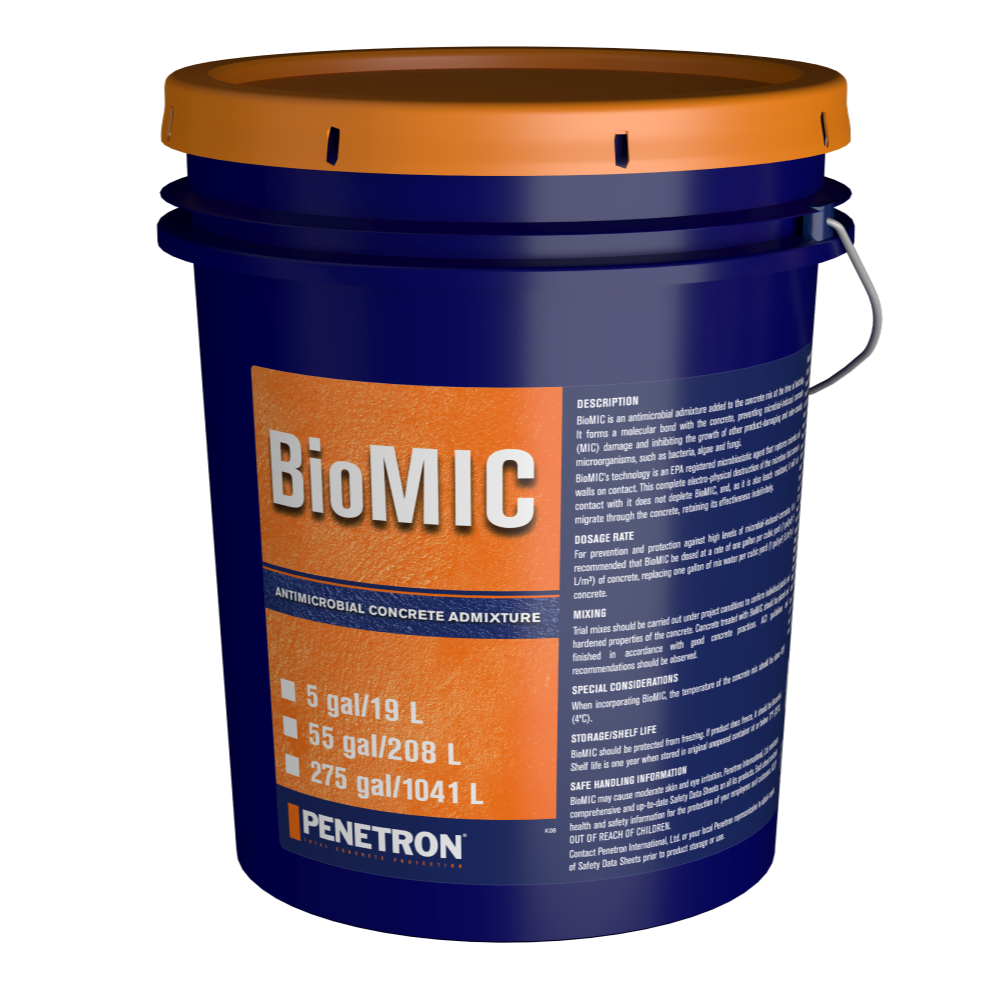
In sewers and treatment plants, sulphate-reducing bacteria can produce sulphuric acid, and that acid attacks the concrete. Penetron Biomic is a liquid admixture that is added to the concrete mix, at 5 litres per m³ of concrete. It forms a molecular bond with the concrete and prevents damage from microbially induced corrosion (MIC). It also inhibits the growth of bacteria, algae and fungi. The technology is registered with the EPA in the United States.
Its effect does not diminish with repeated contact with bacteria, it is resistant to leaching and it remains effective even if the surface is abraded. Biomic is fully compatible with Penetron Admix, although trial mixes under site conditions are needed. The technical data sheet lists precast manholes, pipes and tanks for sewerage, cast-in-place concrete in wastewater treatment, shotcrete and repairs.
Penetron Arc for the gas zone
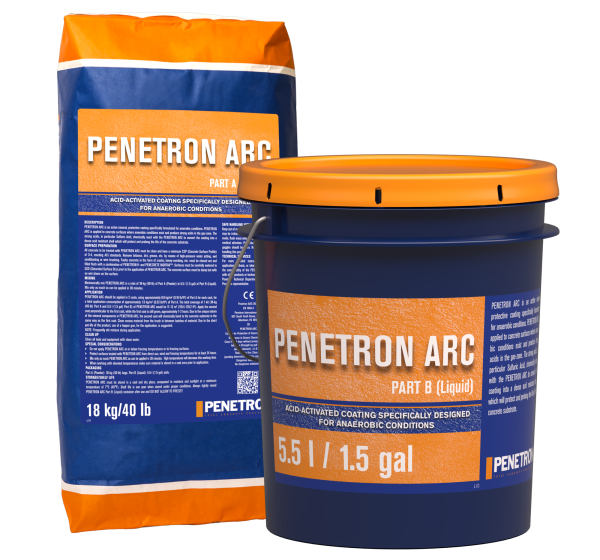
Above the wastewater, in the gas zone of an anaerobic tank, strong acid can form, mainly sulphuric acid. This is where Penetron Arc comes in, an active mineral coating. The acid reacts with the coating and converts it into a dense, acid-resistant shell that protects the concrete. Unlike the crystalline products, Arc is therefore a layer on the concrete. It is applied in two coats: the second perpendicular to the first, while the first is still green.
At the Raízen biogas plant in Brazil, the gas zone of the biogas tank was protected against sulphuric acid with Arc in this way. The tanks themselves, 4,000 m³ of concrete in total, were made waterproof with Penetron Admix, with Penebar SW-55 in the construction joints.
Repairing an existing basin
You repair an existing basin or settling tank in a fixed sequence. You stop active leaks with Peneplug, fill cracks and honeycombing with Penecrete Mortar, and then Penetron Slurry goes onto the damp concrete, in two coats on the walls. According to the technical data sheet, the slurry protects against wastewater, aggressive groundwater and sulphates, and resists chemical attack under constant contact at pH 3 to 11. You can read how this works on site under repair of existing concrete.
Questions
How do you make a concrete water treatment plant waterproof?
For new builds, with Penetron Admix or Admix SB in the concrete and a swellable waterstop in the construction joints. Existing basins get Penetron Slurry, after leaks and cracks have been repaired.
How do you prevent microbial corrosion in concrete?
With Penetron Biomic in the concrete mix, at 5 litres per m³. It prevents damage from microbially induced corrosion and keeps working, even with repeated contact with bacteria.
What is the difference between Biomic and Arc?
Biomic is added to the concrete as an admixture and works against bacteria that produce acid. Arc is a coating for the gas zone of anaerobic tanks, where sulphuric acid forms: the acid converts the coating into an acid-resistant shell.
Can Biomic be used together with Penetron Admix in the concrete?
Yes. According to the technical data sheet, Biomic is fully compatible with Penetron Admix. Trial mixes under site conditions are needed, however.
Which products protect concrete in water treatment plants?
Penetron Admix or Admix SB makes new concrete waterproof, and Penetron Biomic works against microbial corrosion. Penetron ARC protects the gas zone of anaerobic tanks. Existing basins are treated with Penetron Slurry.
How do you prevent chemical damage to concrete structures?
According to the technical data sheet, concrete with Penetron Admix has very good resistance to aggressive chemicals. Penetron Biomic works against microbial corrosion and Penetron ARC protects the gas zone against sulphuric acid. Penetron Slurry is resistant under constant contact from pH 3 to 11.
What are the benefits of self-healing concrete in water treatment?
In concrete with Penetron Admix, hairline cracks of up to 0.5 mm are sealed again later, as long as moisture is present. The concrete also has very good resistance to aggressive chemicals. The sludge bunker in Ghent needed no external membranes or coatings.
How do you extend the service life of concrete structures in water treatment plants?
With concrete that is waterproof and can withstand acid attack: Penetron Admix or Admix SB, optionally with Penetron Biomic, and Penetron ARC in the gas zone. You repair an existing basin with Peneplug, Penecrete Mortar and Penetron Slurry.
Contact
Discover how Penetron can strengthen your next construction project
Tell us about your project. We will help you choose the right product.